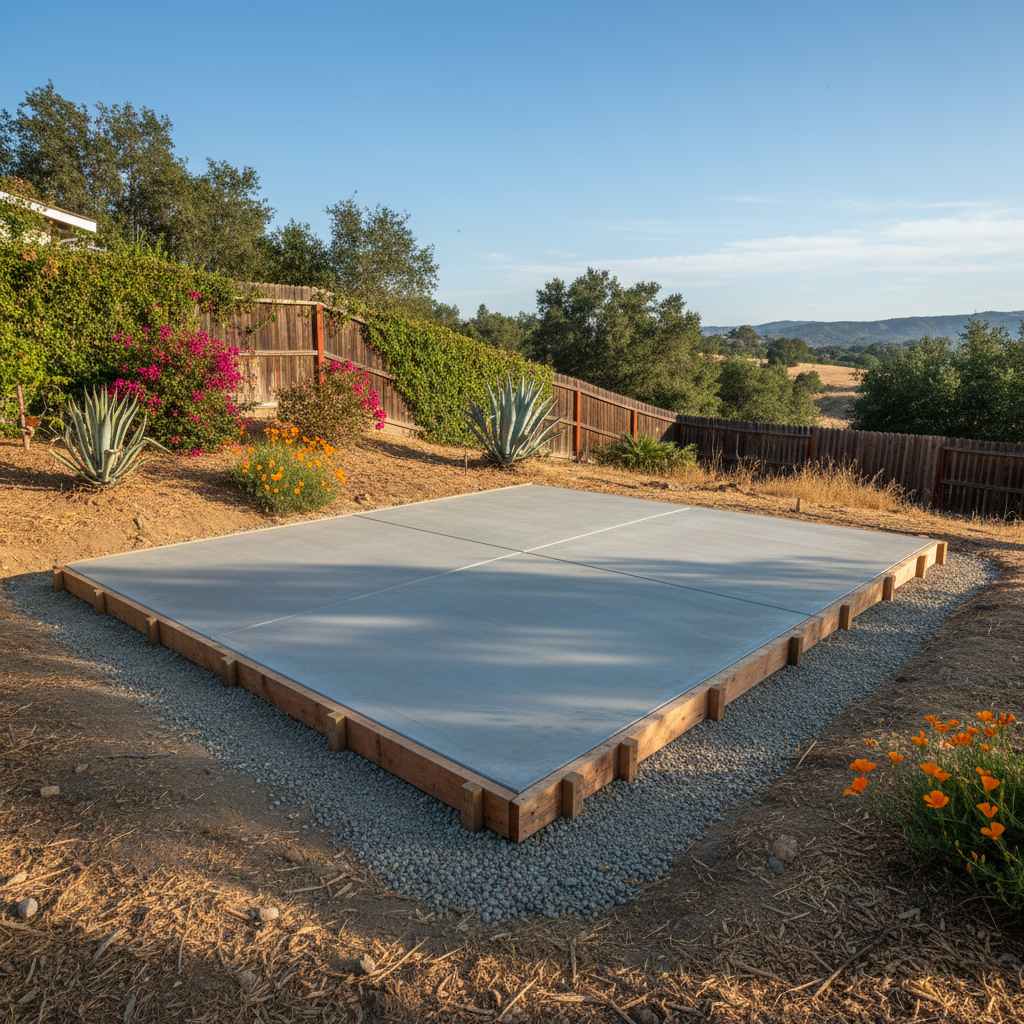
Thinking Any Flat Spot Will Do
I've seen this happen a hundred times. Someone decides they want a shed, they eyeball a spot in the backyard that looks pretty flat, and they just assume that's good enough for the foundation. Big mistake, that. Just because a spot looks level to the naked eye doesn't mean it actually is, especially not for something that needs to support a structure for years. Our San Jose soil, with its clay content in places like Almaden Valley, can shift and settle over time. If your foundation isn't properly prepared and truly level, well, you're just setting yourself up for a world of headaches down the road. Doors won't close right, walls will rack, and you'll have water pooling where it absolutely shouldn't.
Ignoring Drainage and Water Flow
This point really goes hand-in-hand with the first one. You simply have to think about where water is going to go. If your shed foundation sits in a low spot, or if it's not elevated enough, rain and irrigation water will just collect right around it. That's a fast track to rot, mold, and pest infestations. I always tell folks to watch their yard during a good rainstorm. See where the water naturally flows and pools. You want your shed foundation to be a few inches above the surrounding ground, and you need to make sure water drains away from it, not towards it. Good drainage is non-negotiable if you want your shed to last.
Skimping on the Foundation Material
Some folks try to save a buck by using whatever old pavers or scrap wood they have lying around. Or they'll just throw down some gravel and call it a day. Look, I get wanting to save money, but the foundation isn't the place to do it. This is literally the base of your entire investment, isn't it? A proper foundation — whether it's a gravel pad with treated skids, concrete blocks, or a full concrete slab — needs to be built with appropriate, durable materials. Untreated wood will rot, for instance. Flimsy blocks will crack and shift. You're building something that needs to stand up to our hot summers and occasional wet winters for decades. Don't cheap out on the part that holds it all up.
Not Considering Local Regulations and Permits
This is a big one, and it can cause serious delays and fines. Depending on the size and type of shed you're planning, and where you live in San Jose, you might need a permit. Even if the shed itself doesn't require one, significant foundation work often does. Pouring a concrete slab, for example, might trigger permit requirements that a simple gravel pad wouldn't. You really don't want to get halfway through your project only to have a city inspector show up and tell you to tear it all out. Always check with the City of San Jose's planning department or a reputable contractor like Custom Sheds of San Jose who knows the local rules. It's always better to ask upfront than to deal with the consequences later.
Hiring the Wrong Contractor (or Doing It Yourself Poorly)
I've seen some real hack jobs out there. People hire the cheapest guy they can find, or they try to tackle a complex foundation themselves without the right tools or expertise. Foundation work isn't just about digging a hole and pouring some concrete. It requires proper grading, compaction, leveling, and often, specific knowledge about soil conditions. If you're not confident in your ability to do it perfectly, hire a professional. But don't just hire anyone. Look for someone with experience specifically in shed foundations or small concrete pads. Check their references, look at their past work, and make sure they're licensed and insured. A good contractor will understand things like proper rebar placement for a concrete slab or how to ensure adequate drainage for a gravel pad. Don't be afraid to ask detailed questions about their process.
Forgetting About Accessibility
Think about how you're going to get things in and out of your shed. Is the foundation going to be too high off the ground? Will you need a ramp? If so, is that ramp going to be stable and properly integrated with the foundation? I've seen sheds with foundations so high that getting a lawnmower in requires a major struggle. Plan for easy access from the start. A well-designed foundation considers not just stability, but also usability.
Getting your shed foundation right is crucial. It's the literal bedrock of your entire project. Take the time, do your research, and don't cut corners. You'll thank yourself for years to come when your shed stands strong and true.